This is an intriguing site, featuring hi-def views of San Francisco's financial district, Fisherman's Wharf, Telegraph Hill, Russian Hill and Nob Hill San Francisco as viewed from across the bay in Sausalito.
I've linked to the page that gives you the timelapse series from yesterday (it's a large file, so it might take awhile to load) but you can also choose from other views once you're there.
I love the way you see the tide come in and out and the fog rolling in near the end of the day is spectacular.
Link:
Monday, April 14, 2008

It's all about the content
I'm a firm believer that good content is the key to successful communications. Design and useability are important, but they can't overcome the limitations of good content.
The value of good content has always seemed self-evident to me but it often seems to come as a revelation to people with the advent of new technology.
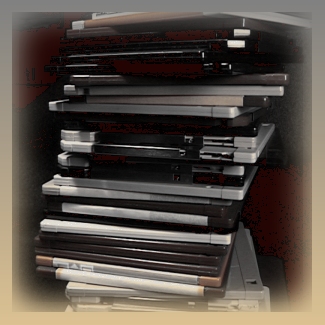 When new, exciting technology comes along, like the rise of desktop publishing in the '80s (remember all the fun we had with those floppies?) or the growth of the Internet in the '90s, a lot of users get seduced by what they can do with their new tools. And at first, the excitement factor keeps everyone interested. But inevitably, if the content of a document or a website is not relevant to the person using it (the so-called "user") the thrill will wear off.
In his latest Alertbox article, Jakob Nielsen lists several examples of bad design examples where the website developers overlooked or downplayed the value of content.
What's useful about Nielsen's list is that he's not advocating wholesale redesigns. He just points out a few missing elements that seem obvious if you consider the site from the user's point of view.
And that's the key to ensuring that your website design stays relevant. Everything about the design has to enhance the experience for the user. They need to be able to find the information they need, presented in a way that let's them use it effectively and move ahead to their next destination.
It's all about the content.
The value of good content has always seemed self-evident to me but it often seems to come as a revelation to people with the advent of new technology.
 When new, exciting technology comes along, like the rise of desktop publishing in the '80s (remember all the fun we had with those floppies?) or the growth of the Internet in the '90s, a lot of users get seduced by what they can do with their new tools. And at first, the excitement factor keeps everyone interested. But inevitably, if the content of a document or a website is not relevant to the person using it (the so-called "user") the thrill will wear off.
In his latest Alertbox article, Jakob Nielsen lists several examples of bad design examples where the website developers overlooked or downplayed the value of content.
What's useful about Nielsen's list is that he's not advocating wholesale redesigns. He just points out a few missing elements that seem obvious if you consider the site from the user's point of view.
And that's the key to ensuring that your website design stays relevant. Everything about the design has to enhance the experience for the user. They need to be able to find the information they need, presented in a way that let's them use it effectively and move ahead to their next destination.
It's all about the content.
Thursday, April 10, 2008
It's the little things that matter to customers
I've been a paid subscriber to Salon for many years. And all in all, I figure it was worth it. When they launched Salon Premium in 2001 to stave off bankruptcy, they were looking for supporters and I was happy to oblige. But over the past year or two, I've found that I'm not reading the site regularly and so paying the $30 yearly fee for Premium access just started to seem like an expense I could do without.
So when Salon recently sent me a reminder that my subscription was about to expire, I decided not to renew. At the bottom of their note to me, they have this line:
But here's what's really interesting...and something I hadn't remembered until today.
One year ago, I went through the same process. Here's what I sent to them back in March, 2007:
So, we'll see whether my subscription finally does get cut off this year.
But there's a lesson to be learned here for companies. If you tell people you're listening to them and you put it in writing, then you should make sure that your systems are actually set up to receive comments and react to them. It appears that Salon hasn't really paid much attention to what I've been telling them for over a year now and if I were once inclined to support them, I'm less inclined to do so now.
So when Salon recently sent me a reminder that my subscription was about to expire, I decided not to renew. At the bottom of their note to me, they have this line:
If you don't plan to renew, we're very interested in understanding why. Please take a minute to drop us a line -- we take your feedback seriously:So, since they asked, I sent them this note.
Best regards,
Sam Porter
Salon Premium
Hi -- I've been a subscriber for many years, but I'm not going toUnfortunately, they don't seem to take the feedback they get quite as seriously as they claim. Because the emails have kept on coming, each one warning me that I'm about to lose out and also inviting me to tell them why I've decided not to renew because, after all "we take your feedback seriously."
renew this year. I get my information from all over the web. I have
hundreds of RSS feeds in my newsreader and there is rarely enough time
to go through them all. While I have enjoyed Salon and appreciate the
good stuff it offers, it's just not worth it to me to continue paying
for something I'm not using any more.
But here's what's really interesting...and something I hadn't remembered until today.
One year ago, I went through the same process. Here's what I sent to them back in March, 2007:
Hi there -- I've been a Salon subscriber for a number of years but I've decided not to renew this year.I've checked my records, but I can't find any record of my having paid for my Premium subscription last year. But it appears that they didn't cut me off, as they were warning me they would.
I work in the information business as a communications consultant and I spend most of my time online. To be honest, I go through so much information on a regular basis that I just don't make much use of my Salon subscription. In the past, I've paid for it because I really support the kind of quality work you do.
But this past year has been a tough one for me and my business. I've relocated across Canada and the costs of setting up a new location, and making new connections in a different city, mean that I need to reduce expenses wherever possible.
I currently have over 800 feeds in my RSS newsreader, as well as more than 50 podcasts that I listen to regularly. In a world of information, I simply don't "need" to pay for your content.
If things improve, I may re-subscribe, but for now, I'll get my news (even if not your unique vision) elsewhere.
So, we'll see whether my subscription finally does get cut off this year.
But there's a lesson to be learned here for companies. If you tell people you're listening to them and you put it in writing, then you should make sure that your systems are actually set up to receive comments and react to them. It appears that Salon hasn't really paid much attention to what I've been telling them for over a year now and if I were once inclined to support them, I'm less inclined to do so now.
Wednesday, April 09, 2008
Time for a chuckle
While I'm sitting here hoping for some kind of divine revelation about the meaning of life, I came across this post from our good friend Lee Hopkins, in the "Adelaide Hills" of Australia. He posted this to his blog and I can't resist passing it along, just in case you don't read him regularly.
As someone who has been known to suffer technology envy on occasion, I certainly can identify with this:
As someone who has been known to suffer technology envy on occasion, I certainly can identify with this:
Three naked women were sitting in a sauna, two were in their mid-twenties, one was in her forties.Via Link
Suddenly there was a beeping sound. One young woman pressed her forearm and the beep stopped.
The others looked at her questioningly.
“That was my pager” she said. “I have a microchip under the skin of my arm”
A few minutes later a phone rang.
The second young woman lifted her palm to her ear. When she finished she explained, “That was my mobile phone. I have a microchip in my hand.”
The older woman felt very low-tech, but not to be outdone she decided she had to do something equally as impressive.
She stepped out of the sauna and went to the bathroom.
She returned with a piece of toilet paper hanging from her derriere.
The others quite naturally raised their eyebrows and stared at her.
“Well, will you look at that!” the older woman exclaimed. “I’m getting a fax!”
Monday, April 07, 2008
Nastiest Figure Skating Falls
A (virtual) friend, Darren Barefoot sent out a call to the blogosphere to help send his wife, Julie Szabo, to the Olympics, thanks to the power of SEO (search engine optimization.)
So, to help the cause, I'm going to send you to her figure skating blog, Boot and Blade, where she's got a post called "Eight of the Worst Falls in Figure Skating."
It's sort of a "reality TV" meets "America's funniest home videos" sort of thing.
One caution though - not for the squeamish!
Here's the link to Julie's blog.
A couple of years ago my wife Julie started a figure skating blog. She’s got a particular purpose in mind for this project: she wants to get media accreditation for the skating events at the 2010 Olympics in Vancouver.Darren and Julie have just moved to Victoria after spending a year living in Malta and Morocco.
One way to do this is to write the most popular figure skating blog in the world, according to Google. She currently sits in the #2 spot.
The goal is to get her up to the top spot, and I need your help. If you’re so inclined, please link to Julie’s blog with the phrase ‘figure skating blog‘. Collectively, we ought to be able to boost her up to the top spot, eh?
So, to help the cause, I'm going to send you to her figure skating blog, Boot and Blade, where she's got a post called "Eight of the Worst Falls in Figure Skating."
It's sort of a "reality TV" meets "America's funniest home videos" sort of thing.
One caution though - not for the squeamish!
Here's the link to Julie's blog.
Technorati Tags:
Figure, Skating, Blog, Julie Szabo
Saturday, April 05, 2008
Weekend fun - copyright edition
OK campers, since the weekend is upon us (and especially for those who aren't interested in the Final Four) let's consider the question:
Is Copyright Cool?
Good question Dave, I can hear you thinking, nodding your head in approval.
So what's the answer?
Not to be coy, but the truth is -- I'm not sure.
I think it is, but I'm not sure it's crossed over to the mainstream yet. But it is getting closer to doing just that.
If you've got the time, I'm going to point you to a couple of videos of speeches by two very smart people - one American and one Canadian - talking about copyright issues in the US and here in Canada.
Larry Lessig
The first is by Larry Lessig, a professor at Stanford, credited with creating the Creative Commons license and a well-known advocate for copyright reform. (Although he's now turned his attention to corruption in US politics.)
He spoke at the TED conference in Monterey, California last March. Lessig is a terrific presenter, as this blurb from the TED website attests:
Watch the video here.
Michael Geist
The second video is by Michael Geist of the University of Ottawa, who is probably Canada's best-known advocate of copyright reform. He's been waging a very public campaign to highlight some of the threats posed by possible changes to Canada's existing copyright rules.
He spoke at Toronto's Osgood Hall law school and they've posted a video of his presentation, which you can watch here.
While these two perspectives on copyright law may not answer the question of whether the issue is cool or not, they are definitely worth watching. They might even inspire you to consider getting more involved with the issue - or at least consider the implications of some of your own habits or those around you.
The issue of intellectual property rights, and their distribution and usage is critical to the future of our "information age." We should all be aware of what's going on so we can decide whether what is happening is correct.
These two guys are worth listening to.
Is Copyright Cool?
Good question Dave, I can hear you thinking, nodding your head in approval.
So what's the answer?
Not to be coy, but the truth is -- I'm not sure.
I think it is, but I'm not sure it's crossed over to the mainstream yet. But it is getting closer to doing just that.
If you've got the time, I'm going to point you to a couple of videos of speeches by two very smart people - one American and one Canadian - talking about copyright issues in the US and here in Canada.
Larry Lessig
The first is by Larry Lessig, a professor at Stanford, credited with creating the Creative Commons license and a well-known advocate for copyright reform. (Although he's now turned his attention to corruption in US politics.)
He spoke at the TED conference in Monterey, California last March. Lessig is a terrific presenter, as this blurb from the TED website attests:
Larry Lessig gets TEDsters to their feet, whooping and whistling, following this elegant presentation of three stories and an argument. The Net's most adored lawyer brings together John Philip Sousa, celestial copyrights, and the "ASCAP cartel" to build a case for creative freedom. He pins down the key shortcomings of our dusty, pre-digital intellectual property laws, and reveals how bad laws beget bad code. Then, in an homage to cutting-edge artistry, he throws in some of the most hilarious remixes you've ever seen.
Watch the video here.
Michael Geist
The second video is by Michael Geist of the University of Ottawa, who is probably Canada's best-known advocate of copyright reform. He's been waging a very public campaign to highlight some of the threats posed by possible changes to Canada's existing copyright rules.
He spoke at Toronto's Osgood Hall law school and they've posted a video of his presentation, which you can watch here.
While these two perspectives on copyright law may not answer the question of whether the issue is cool or not, they are definitely worth watching. They might even inspire you to consider getting more involved with the issue - or at least consider the implications of some of your own habits or those around you.
The issue of intellectual property rights, and their distribution and usage is critical to the future of our "information age." We should all be aware of what's going on so we can decide whether what is happening is correct.
These two guys are worth listening to.
Thursday, April 03, 2008
The war through the eyes of the soldiers
 Frontline aired a powerful documentary this week about the war in Iraq, called Bad Voodoo's War. What made this show unique was that it was filmed entirely by the soldiers on the ground.
Filmmaker Deborah Scranton, who also made The War Tapes, a feature film documentary about Iraq that also featured footage shot by soldiers on the ground, tracked the progress of the Bad Voodoo platoon, National Guardsman who headed over to Iraq last June to provide escorts for supply convoys moving through the country. Before they left, she outfitted them with video cameras and they have been sending back tapes of their lives ever since.
The quality of the footage is remarkable, especially the use of multiple camera shots in single scenes. The did this by using a dashboard camera focussed on the soldiers in their trucks, another dashboard mounted camera facing forward and hand-held cameras carried by the soldiers.
You can watch the film and a lot of other features online here.
I'm very impressed by how PBS has integrated its programming with the Internet. This show, for example, is supplemented by a website with blog postings from the soldiers themselves, details about the people involved, maps of the country, interviews with the director and a very high-quality viewer where you can watch the film.
Compared to the low-quality video clips we've gotten used to on YouTube, this is startling. It makes you realize what's possible with web-based programming.
Once you've watched this film, you might be interested in some of the 72 other Frontline programs that are posted on the PBS site already, with more being added all the time.
The package is worth checking out. And kudos to PBS for the presentation.
Wednesday, April 02, 2008
Flash brings "MAD" magazine's genius to the Web
 If you're of a certain age, you'll remember the fun you had reading MAD magazine.
As a younger person, I probably missed the point of a lot of the satirical content but I appreciated the cleverness, with features like Spy-vs-Spy and The Lighter Side of...
One feature I remember marvelling at was Al Jaffee's fold-in's, where the simple act of folding a page into thirds revealed an entirely different answer to the question posed.
If that sentence above doesn't make any sense, don't worry. Thanks to Flash technology, we are now able to enjoy Al Jaffee's genius (and prescience) right online, courtesy of the New York Times.
See what I'm talking about at this link.
Tuesday, April 01, 2008
April 1 fun with Google
While the web has been filled with April 1 pranks today, Google's posted a few items that are not aimed at fooling people as much as making them smile.
Check out the links below and you'll see what I mean:
Each show a different riff on Google's search page.
Swedish Chef - http://www.google.com/intl/xx-bork/
Pig Latin - http://www.google.com/intl/xx-piglatin/
Hacker (or leetspeak) - http://www.google.com/intl/xx-hacker/
Elmer Fudd - http://www.google.com/intl/xx-elmer/
Klingon - http://www.google.com/intl/xx-elmer/
Mirrored Page - http://elgoog.rb-hosting.de/index.cgi
If you come across others, let me know...
Which is your favourite?
UPDATE -- Here's a program we can all use...
And just in case you haven't had enough Google stuff yet, here's a (ongoing) compilation of all the April Fool's jokes that Google was involved in today.
Check out the links below and you'll see what I mean:
Each show a different riff on Google's search page.
Swedish Chef - http://www.google.com/intl/xx-bork/
Pig Latin - http://www.google.com/intl/xx-piglatin/
Hacker (or leetspeak) - http://www.google.com/intl/xx-hacker/
Elmer Fudd - http://www.google.com/intl/xx-elmer/
Klingon - http://www.google.com/intl/xx-elmer/
Mirrored Page - http://elgoog.rb-hosting.de/index.cgi
If you come across others, let me know...
Which is your favourite?
UPDATE -- Here's a program we can all use...
And just in case you haven't had enough Google stuff yet, here's a (ongoing) compilation of all the April Fool's jokes that Google was involved in today.
Friday, March 28, 2008
What's ahead for laptop computing?
If you're intrigued by Apple's new Macbook Air computer because it's a pretty cool innovation, you might be interested in this article over on ComputerWorld.com. (If you want to filter out all the ads on the page - there's a lot of them - scroll to the bottom and click on the "Print Story" button.)
The Computerworld editors went out and started talking to laptop designers all over the world about some of the concepts they're working on, with a view to trying to figure out what a laptop computer might look like in 2015.
I've been using laptops as my primary computers for many years and I've gone through quite a variety - everything from my Tandy 200 through to my current PowerBook. Some have been more enjoyable than others, but the steady improvements have been startling, when you stop and think about it. There used to be a performance hit when you switched to a laptop and for some applications, that's still a problem. But for most people, a laptop will work fine as a primary computer. And the benefits of not being tied to one location more than offset any possible performance issues, as far as I'm concerned.
I've had my current laptop - a G4 12" Powerbook - for about 4 years now and it's starting to show its age. For one thing, instead of a flat display, I've got a "deep V" style, thanks to the time my backpack crashed into a refrigerator (with me still attached and the laptop inside!) But despite it's rugged appearance, it's still working and I still use it every day.
But I know that before too long I'm going to be in the market for a new machine, so I'm very interested in some of the cool things that are going to be appearing before too much longer.
Thin and touch-screen are the two items that jump out at you when you look through this list. But there's a lot of innovation in the works and the user interface experience is just the most noticeable.
Other significant changes are expected in the kinds of materials the machines are built of, more powerful components and faster processors.
If you like to think about the future -- and seven years into the future is a long way in computer years -- you'll enjoy this piece.
The Computerworld editors went out and started talking to laptop designers all over the world about some of the concepts they're working on, with a view to trying to figure out what a laptop computer might look like in 2015.
A lot has changed in the 20 years since the first laptop computers appeared, including gigahertz processors, color screens, optical drives and wireless data. However, one thing that has stubbornly stayed the same is the conventional clamshell format with its hinged display lid that opens to reveal a mechanical keyboard.There are some pretty cool-looking items in this story. But imagining the laptop of the near future is not just a dreamy thing to do. It's practical as well.
That's about to change. The rules of notebook design and the components that go inside are being rewritten to make the road a better place to work and play.
I've been using laptops as my primary computers for many years and I've gone through quite a variety - everything from my Tandy 200 through to my current PowerBook. Some have been more enjoyable than others, but the steady improvements have been startling, when you stop and think about it. There used to be a performance hit when you switched to a laptop and for some applications, that's still a problem. But for most people, a laptop will work fine as a primary computer. And the benefits of not being tied to one location more than offset any possible performance issues, as far as I'm concerned.
I've had my current laptop - a G4 12" Powerbook - for about 4 years now and it's starting to show its age. For one thing, instead of a flat display, I've got a "deep V" style, thanks to the time my backpack crashed into a refrigerator (with me still attached and the laptop inside!) But despite it's rugged appearance, it's still working and I still use it every day.
But I know that before too long I'm going to be in the market for a new machine, so I'm very interested in some of the cool things that are going to be appearing before too much longer.
Thin and touch-screen are the two items that jump out at you when you look through this list. But there's a lot of innovation in the works and the user interface experience is just the most noticeable.
Other significant changes are expected in the kinds of materials the machines are built of, more powerful components and faster processors.
If you like to think about the future -- and seven years into the future is a long way in computer years -- you'll enjoy this piece.
Subscribe to:
Posts (Atom)